
Showing posts with label rock climbing. Show all posts
Showing posts with label rock climbing. Show all posts
Tuesday, December 27, 2011


Sunday, December 25, 2011
Climbing Specific Conditioning at Onsight Climbing Center
In collaboration with SCA, Onsight was offering the chance of a lifetime to be trained by Tonderai Katiyo and Florian Escoffier!

Tonde is a World Cup route-setter and has conducted training workshops for Japan, China and Hong Kong.

The 1-hour training sessions are short, intensive and meant for Novice and Intermediate Level climbers.

11 High intensive Station that focuses on training a climber specific body part to make them a better climber.

Arms, Back, Core training that trains and help to improve not only the climber strength but balance as well.


Tonde is a World Cup route-setter and has conducted training workshops for Japan, China and Hong Kong.

The 1-hour training sessions are short, intensive and meant for Novice and Intermediate Level climbers.

11 High intensive Station that focuses on training a climber specific body part to make them a better climber.

Arms, Back, Core training that trains and help to improve not only the climber strength but balance as well.

Friday, December 23, 2011
Figure of 8 Belaying Device
Sometimes just called "eight", this device is most commonly used as a descender, but may also be used as a belay device in the absence of more appropriate equipment, although it does not provide enough holding power for this to be recommended.

It is an aluminium (or occasionally steel) "8" shaped device, but comes in several varieties. Its main advantage is efficient heat dissipation. A square eight, used in rescue applications, is better for rappelling than the traditional 8.

Figure eights allow fast but controlled descent on a rope. They are easy to set up and are effective in dissipating the heat caused by friction but have a tendency to put a twist in the rope. Holding the brake hand off to the side twists the rope, whereas holding the brake hand straight down, parallel to the body, allows a controlled descent without twisting the rope.

An 8 descender can wear a rope quicker than a tube style belay/rappel device because of the many bends it puts into the rope. Many sport climbers also avoid them because of the extra bulk an 8 puts on the rack. However, many ice climbers prefer to use the 8, because it is much easier to thread with stiff or frozen rope.

Monday, December 12, 2011
Mad Rock Men's Mugen Tech Performance Velcro Shoe

The next-gen version of Mad Rock's groundbreaking Mugen model boasts our new nature-friendly hemp lining and added performance because of the Mad Rock Power Upper and 3-D midsole. With its understated looks and environmental bona-fides. If you are looking for a feel-good, eco-friendly rock shoe with limit-shattering performance, step right up. Think New Mugen on Steriods.

Material:
- leather
- Rubber sole
- Featuring the stickiest new Science Friction rubber
- Premium leather upper
- Hemp lining limits stretch

Recommanded use:
- Bouldering
- Sport
- Gym
- Competition
Buy Here
Saturday, December 10, 2011
Professional Climber: Chris Sharma
Chris Omprakash Sharma started rock climbing when he was 12 at the Pacific Edge climbing gym. At age 14, Sharma won the Bouldering Nationals. A year later, he completed a 5.14c climb, which was the highest-rated climb in North America at the time. Sharma then moved to Bishop, California,where he climbed The Mandala, a bouldering problem rated V12.

In July 2001, Sharma completed the extension of the established route Biographie in Ceüse, located in the Hautes-Alpes Department of France and renamed it Realization, ignoring the European tradition that equippers and not climbers name routes outside the US. At the time of the first ascent, Biographie was widely considered to be the first consensus 5.15 (9a+) in the world. He has since established or completed many routes at or above 5.15, including La Rambla and Es Pontas (a deep water soloing project in Mallorca). In 2008 Sharma climbed the 250-foot line (76 m), Jumbo Love, at Clark Mountain in California, claiming 5.15b for the grade.
Friday, December 9, 2011
Climbing Dictionary 'B'
Back clean
When leading, to remove superfluous gear from below for anticipated use higher on the pitch, most often when aid climbing by simply reaching back or below to clean. Mindy decided to back clean the last two TCUs she had placed to save them for the centimeter-wide crack out the big roof.
Back step
1. A foot position relative to its foothold wherein the climber uses the outside edge of the toe box, instead of the big toe, inside edge, heel, instep, etc.
2. To use the outside edge of one's foot on a foothold.
3. (the rope) to place a foot or leg between the rope and the rock in such a way as to make entanglement and, subsequently, an upside-down fall more likely. Dude! Watch your right foot! Don't back step the rope!
Bail
To give up and rappel or otherwise get off the route because of weather, darkness, or difficulties. “We both tried and fell on the crux several times, so we bailed.” “We didn’t want to finish in the dark, so we bailed.”
Bail Biner
A carabiner left behind when rappelling or lowering off of a climb, usually left on a single bolt or other protection device mid-pitch.
Bandolier
A short sling with a padding worn over the shoulder by the leader to hold a rack that is too big to be accommodated by gear loops.
Barn door
When the body swings away from the rock from two or more pivot points (usually one hand and one foot) due to the angle. Can occur on a steep lieback as well. Difficult to recover from and often results in a fall.
Base Camp
The lowest fixed camp on a long route or other journey.
Belay
1. the process of paying out the rope to the lead climber, or taking in rope for a follower, while he/she climbs, and of protecting the climber in the event of a fall. Belaying allows a climber to fall and live to try again.
2. the place where a climber belays, and the anchor is set up attaching the climber to the rock, normally at the beginning and end of each pitch. (See belay station.) Also, a session of belaying.
Belay Device
A device that attaches to the climber’s harness through which the rope is threaded for belaying. Its primary purpose is to create friction quickly in the event of a fall so the belayer can stop the rope, which stops the leader’s fall, simply by pulling against the device. The device creates a ‘hairpin’ turn in the rope at all times and allows the belayer to pay out or take in slack freely, and to stop or brake the rope in an instant. Common belay devices: ATC, GriGri, Sticht Plate

Belay Monkey
Any person recruited for the task of belaying for long periods of time. Similar to Belay Betty; usually a non-climbing female recruited to belay a significant other.
Belay Station
A secure stance consisting of an anchor, a rope, and a belayer with a belay device. The place where a belayer sits, stands or hangs while belaying.
Belay on
When the belayer is ready to belay the climber up, he yells "Belay on". (At least in the US, "belay on" would only confuse the hell out of a British climber who prefers to hear "Climb when ready").
Belayer
A person who is belaying a climber.
Beta
Information about a route.
Betaflash
1. A clean first ascent with no falls after having received beta. (This contrasts an onsightflash, a clean ascent with no prior knowledge of the route.
2. to perform a betaflash.
Big wall
A large expanse of steep rock taking a minimum of three days to climb with conventional methods (free and aid climbing, hauling a bag with food water and shelter). El Cap and Half Dome in Yosemite Valley are big walls though both have routes that have been climbed in less than a day. The majority of routes on both require three to eight days to climb. Washington Column, Sentinel, and Leaning Tower are usually not referred to as a big walls. 2. (adj.) Of or pertaining to a big wall. (e.g., big wall climbing gear).
Biner
Slang for carabiner, a metal ring with a spring-loaded gate used to attach the rope to protection, and many other things. (See carabiner.)

Bird Beak
A thin hook used as protection in small cracks and pockets.
Bivouac
1. a place to spend the night.
2. to spend the night, often in an unexpected location. Slang: Bivy
Bivy
Slang for Bivouac. A place to spend the night. 2.(vb.) to spend the night, often in an unexpected location.
Bolt
A permanent anchor in the rock installed individually as a protection device, or with other bolts or protection devices as an anchor. The bolt is a metal shaft 1/4 inch, 3/8 inch or 5/16 inch in diameter (common sizes), driven into a hole drilled by the climber, and equipped with a hanger to attach a carabiner. Generally, no one installs 1/4 inch bolts anymore, and because most of them are more than 25 years old, they should not be used when found. Occasionally they can be pried out by hand, or break under body weight.
Bomb-bay
Describes a chimney (or sometimes lesser crack) that opens at the bottom toward the ground, similar to the bomb-bay doors on a B-52 aircraft.
Bomber
A corruption of "bombproof" meaning very secure.
Bombproof
Very secure, unlikely to move even when subjected to great force.
Bong
An extra-wide-angled piton used primarily in the early days of big wall climbing.
Booty
gear left behind for the taking, usually either from a previous party bailing on a route or accidentally fixing gear.
Boulder
A big rock typically climbed without a rope. May be head high to over 30 feet. Each boulder may have many distinct routes. Boulder problems are often top roped (See top rope), but climbing without a rope is thought to be better style. To boulder or to go bouldering is to climb boulder problems.

Bouldering Pad
A mat three to four inches thick, and roughly four feet square placed on the ground under a boulderer to cushion a fall. Usually made of layers of foam of various densities and covered with heavy, durable nylon and equipped with straps so that it can be folded in half and carried from place to place on the climber’s back. Also known as a crash pad.
Bouncing
Sport climbing technique used to regain the rock after falling and the climber is hanging free and out of reach of the rock. The climber climbs the rope hand over hand (very strenuous), and then drops. At the instant the climber lets go, the belayer hauls in slack thereby raising the climber. Repeating this process eventually brings the climber back to the rock. Also known as boinking, and to superman (compare with batman).
Bowline knot
One of the two common knots for tying in to the climbing harness (after the Figure 8 knot). Used by some experienced climbers for indoor and sport climbing because it is easier to untie after repeated loadings. Can be tied with one hand. Should be periodically re-tightened and the loose end MUST be secured with a Stopper knot - it may pull through the loop otherwise. "The rabbit goes out of the hole, around the tree, and back down the hole" is a commonly used phrase that provides hints on how to tie the bowline knot.
Brachiate
To swing from one hold to another by the arms.
Brake Hand
The hand that holds the rope on the opposite side of the belay device to the climber.
Brain Bucket
Climbing helmet

Brèche
A notch in a ridge
Bridging
Climbing manouver involving arching the legs across a gap to put pressure on two opposing holds or walls. See also: Stemming.
Bucket
big handhold that is easy to hold onto. Usually a depression, hole or scoop (concave) in the rock. See also jug.
Bump
To move from one hand hold to another with the same hand in a sequential move, typically from an intermediate hold in a linear fashion.
Buildering
To climb on buildings or manmade structures. Often done for training for rock climbing.
Buttress
A part of the mountain or rock formation that stands out from the main face. May also be used to describe the corner of a rock formation, e.g., the East Buttress of Middle Cathedral.
When leading, to remove superfluous gear from below for anticipated use higher on the pitch, most often when aid climbing by simply reaching back or below to clean. Mindy decided to back clean the last two TCUs she had placed to save them for the centimeter-wide crack out the big roof.
Back step
1. A foot position relative to its foothold wherein the climber uses the outside edge of the toe box, instead of the big toe, inside edge, heel, instep, etc.
2. To use the outside edge of one's foot on a foothold.
3. (the rope) to place a foot or leg between the rope and the rock in such a way as to make entanglement and, subsequently, an upside-down fall more likely. Dude! Watch your right foot! Don't back step the rope!
Bail
To give up and rappel or otherwise get off the route because of weather, darkness, or difficulties. “We both tried and fell on the crux several times, so we bailed.” “We didn’t want to finish in the dark, so we bailed.”
Bail Biner
A carabiner left behind when rappelling or lowering off of a climb, usually left on a single bolt or other protection device mid-pitch.
Bandolier
A short sling with a padding worn over the shoulder by the leader to hold a rack that is too big to be accommodated by gear loops.
Barn door
When the body swings away from the rock from two or more pivot points (usually one hand and one foot) due to the angle. Can occur on a steep lieback as well. Difficult to recover from and often results in a fall.
Base Camp
The lowest fixed camp on a long route or other journey.
Belay
1. the process of paying out the rope to the lead climber, or taking in rope for a follower, while he/she climbs, and of protecting the climber in the event of a fall. Belaying allows a climber to fall and live to try again.
2. the place where a climber belays, and the anchor is set up attaching the climber to the rock, normally at the beginning and end of each pitch. (See belay station.) Also, a session of belaying.
Belay Device
A device that attaches to the climber’s harness through which the rope is threaded for belaying. Its primary purpose is to create friction quickly in the event of a fall so the belayer can stop the rope, which stops the leader’s fall, simply by pulling against the device. The device creates a ‘hairpin’ turn in the rope at all times and allows the belayer to pay out or take in slack freely, and to stop or brake the rope in an instant. Common belay devices: ATC, GriGri, Sticht Plate
Belay Monkey
Any person recruited for the task of belaying for long periods of time. Similar to Belay Betty; usually a non-climbing female recruited to belay a significant other.
Belay Station
A secure stance consisting of an anchor, a rope, and a belayer with a belay device. The place where a belayer sits, stands or hangs while belaying.
Belay on
When the belayer is ready to belay the climber up, he yells "Belay on". (At least in the US, "belay on" would only confuse the hell out of a British climber who prefers to hear "Climb when ready").
Belayer
A person who is belaying a climber.
Beta
Information about a route.
Betaflash
1. A clean first ascent with no falls after having received beta. (This contrasts an onsightflash, a clean ascent with no prior knowledge of the route.
2. to perform a betaflash.
Big wall
A large expanse of steep rock taking a minimum of three days to climb with conventional methods (free and aid climbing, hauling a bag with food water and shelter). El Cap and Half Dome in Yosemite Valley are big walls though both have routes that have been climbed in less than a day. The majority of routes on both require three to eight days to climb. Washington Column, Sentinel, and Leaning Tower are usually not referred to as a big walls. 2. (adj.) Of or pertaining to a big wall. (e.g., big wall climbing gear).
Biner
Slang for carabiner, a metal ring with a spring-loaded gate used to attach the rope to protection, and many other things. (See carabiner.)
Bird Beak
A thin hook used as protection in small cracks and pockets.
Bivouac
1. a place to spend the night.
2. to spend the night, often in an unexpected location. Slang: Bivy
Bivy
Slang for Bivouac. A place to spend the night. 2.(vb.) to spend the night, often in an unexpected location.
Bolt
A permanent anchor in the rock installed individually as a protection device, or with other bolts or protection devices as an anchor. The bolt is a metal shaft 1/4 inch, 3/8 inch or 5/16 inch in diameter (common sizes), driven into a hole drilled by the climber, and equipped with a hanger to attach a carabiner. Generally, no one installs 1/4 inch bolts anymore, and because most of them are more than 25 years old, they should not be used when found. Occasionally they can be pried out by hand, or break under body weight.
Bomb-bay
Describes a chimney (or sometimes lesser crack) that opens at the bottom toward the ground, similar to the bomb-bay doors on a B-52 aircraft.
Bomber
A corruption of "bombproof" meaning very secure.
Bombproof
Very secure, unlikely to move even when subjected to great force.
Bong
An extra-wide-angled piton used primarily in the early days of big wall climbing.
Booty
gear left behind for the taking, usually either from a previous party bailing on a route or accidentally fixing gear.
Boulder
A big rock typically climbed without a rope. May be head high to over 30 feet. Each boulder may have many distinct routes. Boulder problems are often top roped (See top rope), but climbing without a rope is thought to be better style. To boulder or to go bouldering is to climb boulder problems.
Bouldering Pad
A mat three to four inches thick, and roughly four feet square placed on the ground under a boulderer to cushion a fall. Usually made of layers of foam of various densities and covered with heavy, durable nylon and equipped with straps so that it can be folded in half and carried from place to place on the climber’s back. Also known as a crash pad.
Bouncing
Sport climbing technique used to regain the rock after falling and the climber is hanging free and out of reach of the rock. The climber climbs the rope hand over hand (very strenuous), and then drops. At the instant the climber lets go, the belayer hauls in slack thereby raising the climber. Repeating this process eventually brings the climber back to the rock. Also known as boinking, and to superman (compare with batman).
Bowline knot
One of the two common knots for tying in to the climbing harness (after the Figure 8 knot). Used by some experienced climbers for indoor and sport climbing because it is easier to untie after repeated loadings. Can be tied with one hand. Should be periodically re-tightened and the loose end MUST be secured with a Stopper knot - it may pull through the loop otherwise. "The rabbit goes out of the hole, around the tree, and back down the hole" is a commonly used phrase that provides hints on how to tie the bowline knot.
Brachiate
To swing from one hold to another by the arms.
Brake Hand
The hand that holds the rope on the opposite side of the belay device to the climber.
Brain Bucket
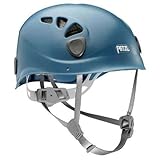
Climbing helmet
Brèche
A notch in a ridge
Bridging
Climbing manouver involving arching the legs across a gap to put pressure on two opposing holds or walls. See also: Stemming.
Bucket
big handhold that is easy to hold onto. Usually a depression, hole or scoop (concave) in the rock. See also jug.
Bump
To move from one hand hold to another with the same hand in a sequential move, typically from an intermediate hold in a linear fashion.
Buildering
To climb on buildings or manmade structures. Often done for training for rock climbing.
Buttress
A part of the mountain or rock formation that stands out from the main face. May also be used to describe the corner of a rock formation, e.g., the East Buttress of Middle Cathedral.
Arc'teryx R300 Climbing Harness

Features:
Wide swami belt and leg loops are constructed with Warp Strength Technology (WST) from ARCTERYX that provides maximum support and strength at vastly reduced weight Four gear loops a non-structural haul loop Wear safety markers on belay loop and tie-in points Sure Fit elasticized leg loop connectors provide a snug fit Stretchy mesh storage bag. Self-locking 7075 T6 aluminum buckle at the waist provides an extra margin of safety by allowing adjustments while maintaining the proper double-back configuration
Specifications:
Weight: 109 ounces Haul loop and 4 Gear loops.

Buy Here:
Singapore Rock Climbing Walls and Gyms
Here's a list of places where you can experience Some Rock Climbing in Singapore:
with 13m and 15m wall Great for speed climbing and lead climbing with a great scenery of Pasir Ris beach. Equipment provided.
with 13m and 15m wall Great for speed climbing and lead climbing with a great scenery of Pasir Ris beach. Equipment provided.
2) BorderX Pte Ltd
181 Orchard Road, #04-22
Singapore, 238896 Singapore
+65 68844870
Standing at 30m in height, it is home to the world\'s tallest indoor via ferrata climbing wall. The wall also has three lanes of rock climbing, ranging from 5A to 6B in difficulty. Safety on these climbing lanes are managed via auto belay units.
3) Climb Asia Climbing Centre Pte Ltd
60 Tessensohn Road
c/o: Civil Service Club
Singapore 217664
(65) 6292 7701
With a 20m wide indoor climbing wall - 9m high; 9 lanes outdoor high wall - 15 meters; indoor bouldering cave
4) Yishun Safra Climbing Centre
60 Yishun Avenue 4
Singapore, Singapore 769027
Singapore's largest outdoor climbing facility with walls ranging in heights of 15 to 25 metres, a free-form crack wall with two crack climbs of varying width and a chimney climb feature to simulate climbing on natural rocks. And also two floors of indoor bouldering.
5) Climbers Laboratory
48 Toh Guan Rd East #05-152 Enterprise Hub
608586 Singapore
+65- 6515 9363
2 Levels of bouldering, 15 meter wall and 28 meter high wall. 28 Climbing Lanes of 8 metres T-Wall Panels using Triax System
6) Climbers Laboratory 2
Kallang Ture
66 Kampong Bugis #08-01
Kallang Rivergreen Building
Singapore 338987
tel: 62993520
7) Kinetics Climbing Pte Ltd
160 Paya Lebar Road #02-07, Orion @ Paya Lebar
Singapore, 409022 Singapore
+65 67456426
Climbing solutions for all your climbing needs! An air-conditioned indoor bouldering and top rope climbing centre. Frequently updated routes, Kinetics caters to both beginners and climbing enthusiasts. We also offer various courses and technique clinics conducted by our certified and experienced instructors.
8) Onsight Climbing
100 Guillemard Road, Guillemard Village
Singapore 399718
+65 6348 8272
9) Safra Toa Payoh
293 Toa Payoh Lorong 6
Singapore 319387
130 sq m surface, 12 m speed climbing training wall
10) Shines Outdoor
1208 upper boon keng road
Singapore, 387312 Singapore
68417030
11m by 5m wall. Climbing orientation and climbing level 1 & 2.
11) The Rock School
850 New Upper Changi Road
Singapore, 467352 Singapore
(+65) 91199003
The Rock School is Singapore’s first climbing centre designed, constructed and dedicated to kids of ages 4 to 14 years old. We aim to promote the sport of Rock Climbing in a fun and safe environment. Besides training kids to rock climb in a safe and fun environment, educational elements are also included in activities and programs. In addition, time for family bonding is a significant part of The Rock School focus.
12) Ubin Lagoon Resort
Signature Lifestyle Pte Ltd
600 Punggol Seventeenth Ave
Singapore 63367001
135 sq m of indoor climbing surface. No access to climbing wall without prior booking
Belaying Devices : Petzl Grigri
A Gri-gri is a belay device that automatically locks the rope in the event of a fall. Because of the self-locking mechanism, modified belay techniques are widely used. Gri-gri's reportedly give a harder catch than a regular belay device because they allow less rope slippage when catching a hard fall. They are a proprietary design by Petzl. The Gri-gri is a preferred device for belaying the follower directly off the anchor because lowering the follower is quite easy. Trango sells a similar self-locking belay device called the Cinch that is rated to work on ropes 9.4 to 11 mm (the Gri-Gri is rated from 10 to 11 mm).

Using a Gri-gri to bring up a second on a traditional anchor is however less favorable than other belay devices because the Gri-gri gives a more static catch with little to no rope slippage. This increases the amount of force exerted on the anchor which, in turn, increases the chance of anchor failure.
Mechanism of operation

The Grigri works by locking when sudden acceleration occurs to the rope (like in a fall), therefore making it an automatic belay device unlike traditional belay devices such as a Sticht plate or an ATC. The device acts like an automobile seat belt, if you move the rope slowly you can run the rope through the Grigri without it locking but a shock load locks the device so rope won't run. One of the criticisms of automatic belay devices is that they can lead to a false sense of security. The automatic functionality may result in the belayer being less attentive to the climber than with a more traditional belay device. However, like any tool, proper training is required for proper use.
Pros and cons of use
Some climbers feel that the Grigri is only suitable for top rope climbing and not lead climbing due to the auto-locking feature, though Petzl recommends the device for use in both applications. The claim against usage for lead climbing is that since the device auto-locks, the belayer is required to hold the device open while feeding rope to the leader. A common mistake while belaying a lead climber is to hold open the device the entire time, thus defeating the auto-locking mechanism. This practice does compromise the added margin of safety that the GriGri contributes to the belay over more traditional belay devices, though release of the device during a fall will still allow the device to lock normally. Users can and should learn how to feed rope without holding the device open, though learning to quickly and confidently disengage the braking mechanism is important for a safe belay, as accidental locking of the Grigri can cause problems for the leader that may lead to a fall. Petzl has released information on how rope should be fed through in a lead climb, including how to let slack out quickly so that the climber can clip a quickdraw on a sport route.

While designed as a belay device, big wall climbers have invented novel ways to use the Grigri that are not recommended by the manufacturer. For example some big wall soloists use the Grigri (sometime slightly modified but not necessarily) as a self-feeding hands-free self-belay device. In big wall situations, the Grigri allows for hands-free belaying on long aid pitches while the rest of the party does other things. It can also be used by the second to self-belay while jumaring the rope as one half of the ascender pair; the leader can belay the second hands-free allowing the leader to haul, take pictures, or do other chores; the second can use it to lower out while following a traverse.

The Grigri is heavier and more expensive than other belay devices. Many climbers aim to reduce weight on their harness (equipment attached to the harness is known as a "rack") as much as possible as it can drain energy. However, there are applications where only an automatic belay device will work. The Grigri has a lower limit for the rope size for which the clutch will engage. This makes it unusable with many of today's skinny ropes - like those used in many alpine applications.
Many novice climbers make the mistake of thinking that an auto locking device such as the Grigri, Cinch or Eddy can make up for a lack of belaying skill. This is not true, and does cause accidents. It is very important correct training is received before belaying with any device commences.
Subscribe to:
Posts (Atom)